
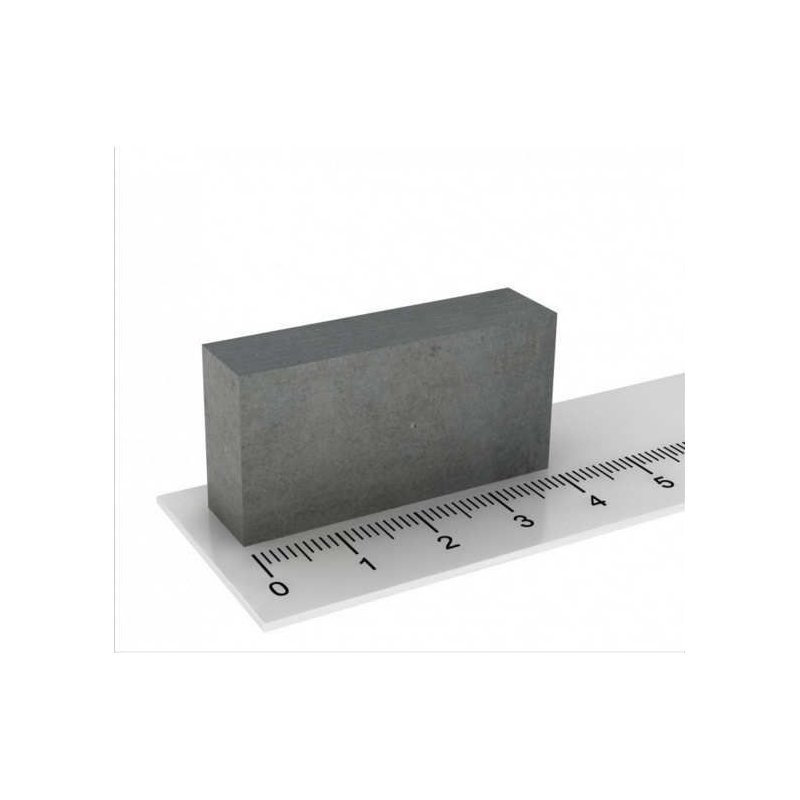
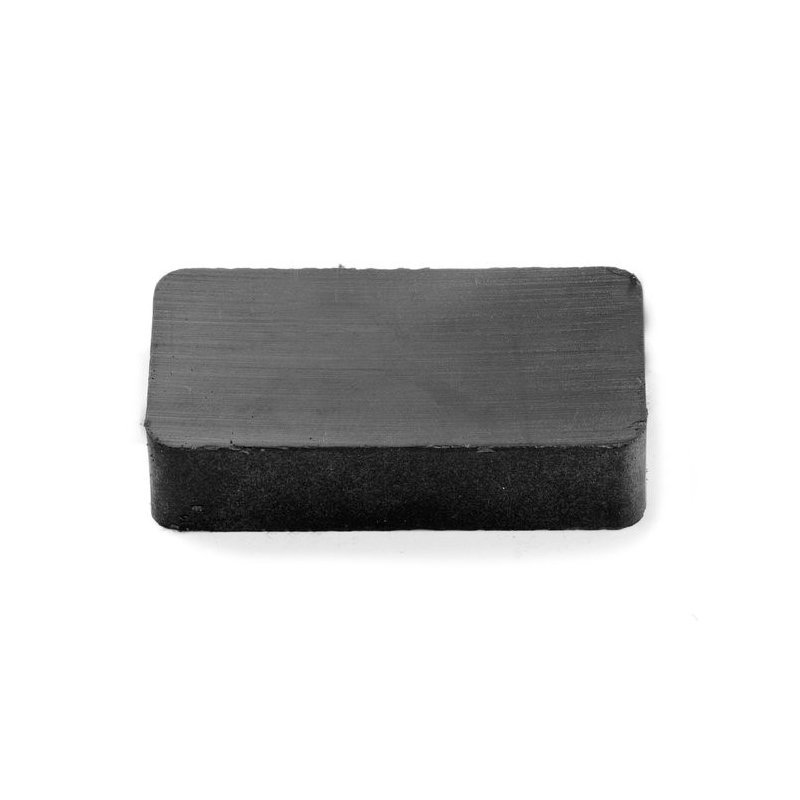
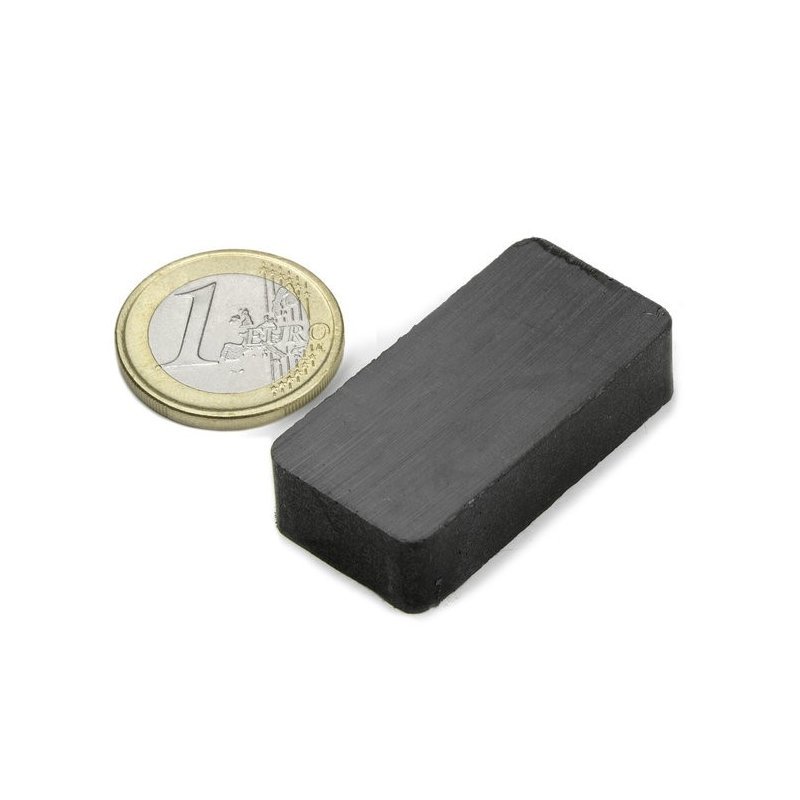
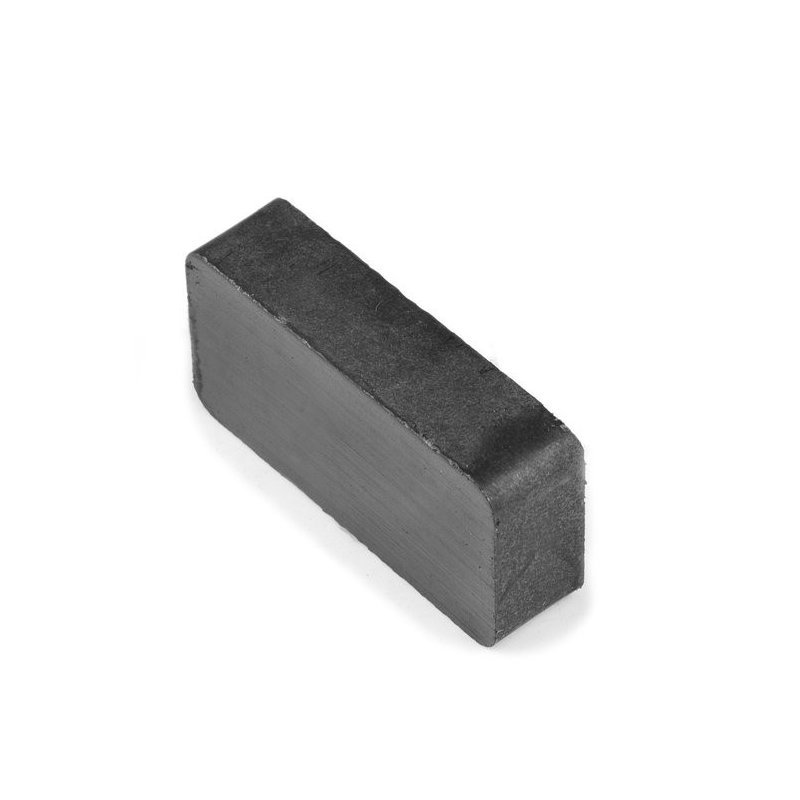
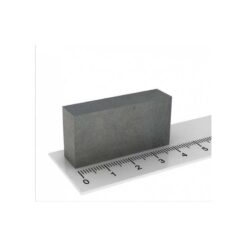
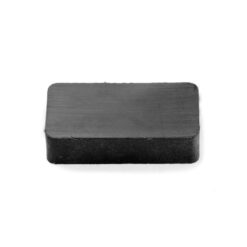
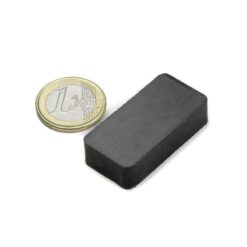
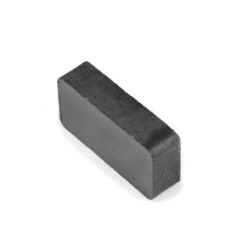
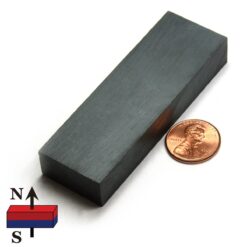
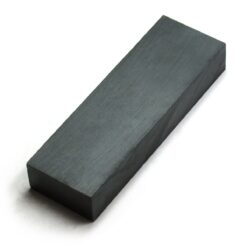
Ferrite Block Magnet 40 x 25 x 10 mm (1-9/16 x 1 x 3/8 in), Y35 Ceramic Magnet
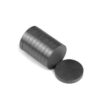
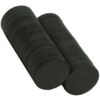
€ 0.23 per piece
Minimum order: 50 pcs
Y35 ferrite block magnet, 40 x 25 x 10 mm (1-9/16 x 1 x 3/8 in). Pull force about 2.1–3.1 kg (4.6–6.8 lbs), uncoated (ceramic surface), max. 220 °C. Price per piece, minimum order 50 pcs. Worldwide shipping.
This 40 x 25 x 10 mm (1-9/16 x 1 x 3/8 in) ferrite block magnet delivers roughly 2.1–3.1 kg of pull force on flat steel, in grade Y35. Ferrite magnets, also called ceramic magnets, are made of strontium or barium ferrite. They are weaker than neodymium for the same size, but they do not rust, cost less and keep working at higher temperatures. It weighs about 49 g and works up to 220 °C without a coating.
Specifications
| Shape | Block (rectangular) |
|---|---|
| Length | 40 mm |
| Width | 25 mm |
| Thickness | 10 mm |
| Tolerance | ± 0.2 mm |
| Material | Strontium/barium ferrite (ceramic) |
| Grade | Y35 |
| Coating | Uncoated (ceramic surface) |
| Max. working temperature | 220 °C |
| Magnetisation | Axial (poles on the flat faces) |
| Pole marking | None (N and S are not marked) |
| Pull force (perpendicular) | about 2.1–3.1 kg (4.6–6.8 lbs) |
| Shear force (vertical surface) | about 450–680 g |
| Surface field | about 1,000 gauss (0.10 T) |
| Remanence (Br) | 0.40–0.41 T (4.0–4.1 kG) |
| Coercivity (Hcj) | 180–200 kA/m (2.3–2.5 kOe) |
| Energy product (BHmax) | 30–32 kJ/m³ (3.8–4.0 MGOe) |
| Weight | about 49 g per piece |
| Product code | ASOMAG0204 |
How strong is a 40 x 25 x 10 mm ferrite block magnet?
Pulled straight off a steel plate at least 10 mm thick, this magnet holds about 2.1–3.1 kg (4.6–6.8 lbs, 21–30 N). On a vertical steel surface the shear (sliding) resistance is only about 450–680 g, roughly a fifth of the pull force, so use more magnets or a stop when the load hangs on a wall. The field at the centre of the face is about 1,000 gauss. Real-world holding force is lower than the test value whenever there is a gap, a thin or rusty steel sheet, or a sideways load. Values are calculated for ideal conditions; allow a safety margin. You can estimate other sizes with our magnet pull force calculator.
Compare with similar sizes
| Size | Pull force (approx.) | In pounds |
|---|---|---|
| 25x10x4 mm | 500–750 g | 1.1–1.7 lbs |
| 30x20x10 mm | 1.4–2.1 kg | 3.1–4.6 lbs |
| 35x15x10 mm | 1.3–2 kg | 2.9–4.4 lbs |
| 40x20x5 mm | 1.1–1.7 kg | 2.4–3.7 lbs |
| 40x20x10 mm | 1.8–2.7 kg | 4.0–6.0 lbs |
| 40x25x10 mm (this magnet) | 2.1–3.1 kg | 4.6–6.8 lbs |
| 74x25x15 mm | 4.2–6.4 kg | 9–14 lbs |
Where is a 40 x 25 x 10 mm magnet used?
- Loudspeakers, buzzers and small motors
- Fridge magnets, craft and school projects
- Magnetic catches and holding fixtures
- Applications up to 250 °C where neodymium would lose strength
- Low-cost magnetic separation and sorting
Handling and safety
Ferrite magnets are brittle; do not let them snap together. Keep magnets away from children, pacemakers, credit cards and electronic devices. Read our magnet safety guide before handling large sizes.
Ordering and shipping
The price shown is per piece (€0.23); the minimum order is 50 pcs. We ship worldwide. Air shipments of strong magnets must follow the IATA rules for magnetized material; read how magnets are shipped internationally. For larger quantities or other sizes, grades and coatings, ask for a bulk or custom magnet quote.
Frequently asked questions
How strong is a 40 x 25 x 10 mm ferrite block magnet?
About 2.1–3.1 kg (4.6–6.8 lbs, 21–30 N) when pulled straight off thick, flat steel. On a vertical steel wall it resists sliding up to about 450–680 g.
Which side is north?
The poles are on the two flat faces but are not marked. Use a compass or a marked magnet: the face that attracts the north end of a compass needle is the south pole.
What does Y35 mean?
Y35 is a common ferrite grade with remanence of about 0.40 T. Ferrite is weaker than neodymium but cheaper and heat resistant.
Will it rust?
No. Ferrite is a ceramic and does not corrode.
What is the minimum order?
50 pcs.
Do you ship magnets internationally?
Yes, we ship worldwide. Strong magnets sent by air must meet the IATA rules for magnetized material; see our guide to shipping magnets.
| Weight | 0.049 kg |
|---|
Be the first to review “Ferrite Block Magnet 40 x 25 x 10 mm (1-9/16 x 1 x 3/8 in), Y35 Ceramic Magnet”
You must be logged in to post a review.
Related products
Ferrite (Ceramic) Magnets
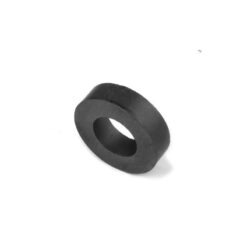
Ferrite Ring Magnet 30 x 10 mm with 9 mm Hole (1-3/16 x 3/8 in), Y35 Ceramic Magnet
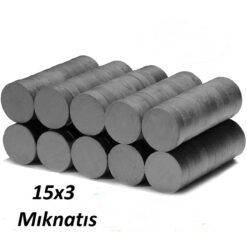

Ferrite (Ceramic) Magnets
Ferrite Disc Magnet 15 x 3 mm (9/16 x 1/8 in), Y35 Ceramic Magnet
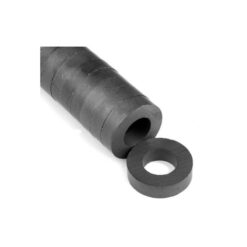
Ferrite (Ceramic) Magnets
Ferrite Ring Magnet 35 x 6 mm with 18 mm Hole (1-3/8 x 1/4 in), Y35 Ceramic Magnet
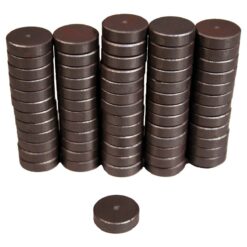
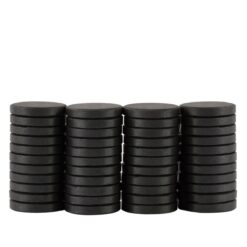
Ferrite (Ceramic) Magnets
Ferrite Disc Magnet 10 x 3 mm (3/8 x 1/8 in), Y35 Ceramic Magnet
Ferrite (Ceramic) Magnets
Ferrite Block Magnet 74 x 25 x 15 mm (2.91 x 1 x 9/16 in), Y35 Ceramic Magnet
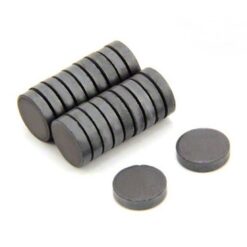

Ferrite (Ceramic) Magnets
Ferrite Disc Magnet 14 x 3 mm (9/16 x 1/8 in), Y35 Ceramic Magnet
Ferrite (Ceramic) Magnets
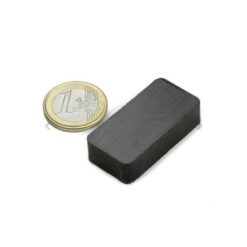
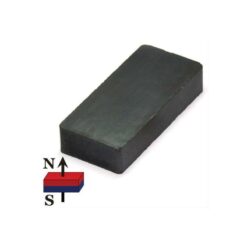
Ferrite Block Magnet 40 x 20 x 10 mm (1-9/16 x 13/16 x 3/8 in), Y35 Ceramic Magnet
Ferrite (Ceramic) Magnets
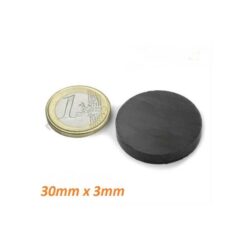
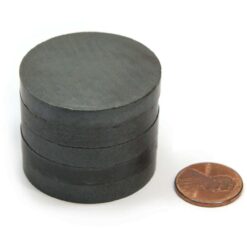
Ferrite Disc Magnet 30 x 3 mm (1-3/16 x 1/8 in), Y35 Ceramic Magnet
Reviews
There are no reviews yet.