
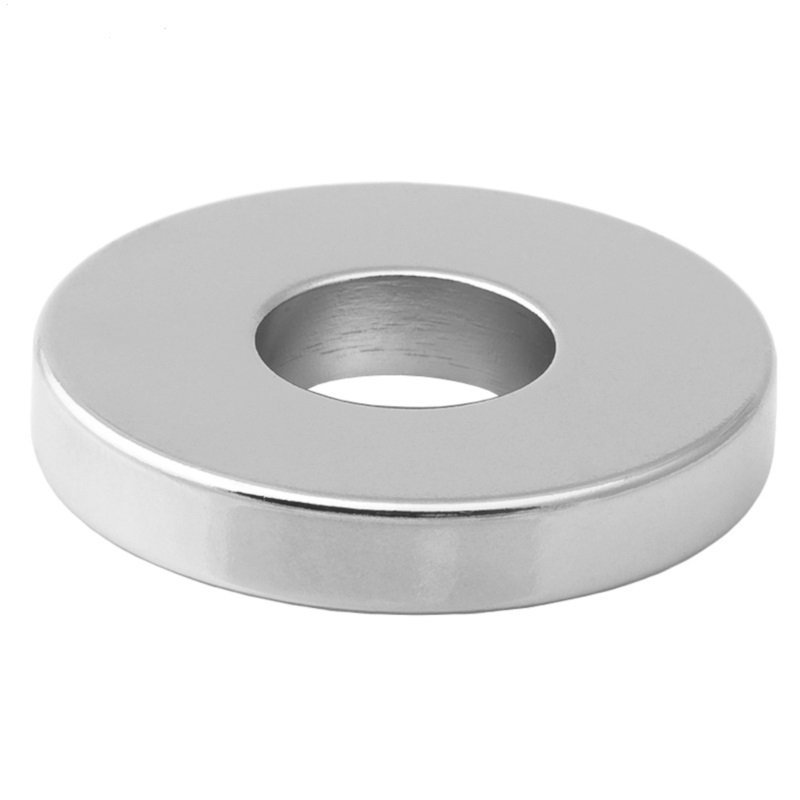
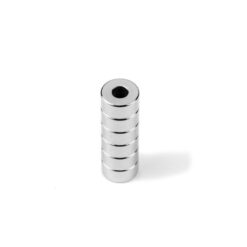
The 70 x 10 mm ring magnet is a N35 rare earth magnet that pulls about 24–36 kg (53–79 lbs) straight off a thick steel plate. NdFeB neodymium is the rare earth material behind the strongest permanent magnets on the market. Its nickel plating prevents oxidation, and the magnet keeps its strength for decades in normal indoor use. It weighs about 228.3 g, is nickel plated and works up to 80 °C.
Specifications
| Shape | Ring with centre hole |
|---|---|
| Outer diameter | 70 mm |
| Hole diameter | 32 mm |
| Thickness | 10 mm |
| Tolerance | ± 0.1 mm |
| Material | Neodymium iron boron (NdFeB) |
| Grade | N35 |
| Coating | Nickel (Ni) |
| Max. working temperature | 80 °C |
| Magnetisation | Axial (poles on the flat faces) |
| Pole marking | None (N and S are not marked) |
| Pull force (perpendicular) | about 24–36 kg (53–79 lbs) |
| Shear force (vertical surface) | about 5.3–8 kg |
| Surface field | about 1,600 gauss (0.16 T) |
| Remanence (Br) | 1.17–1.22 T (11.7–12.2 kG) |
| Coercivity (Hcj) | ≥ 955 kA/m (≥ 12 kOe) |
| Energy product (BHmax) | 263–287 kJ/m³ (33–36 MGOe) |
| Weight | about 228.3 g per piece |
| Product code | ASOMAG0187 |
How strong is a 70 x 10 mm neodymium ring magnet?
Pulled straight off a steel plate at least 10 mm thick, this magnet holds about 24–36 kg (53–79 lbs, 235–353 N). On a vertical steel surface the shear (sliding) resistance is only about 5.3–8 kg, roughly a fifth of the pull force, so use more magnets or a stop when the load hangs on a wall. The field at the centre of the face is about 1,600 gauss. Pull force drops quickly with distance: paint, plastic, fabric or an air gap between the magnet and the steel reduces it, and with small magnets a 1 mm gap can halve it. Values are calculated for ideal conditions; allow a safety margin. You can estimate other sizes with our magnet pull force calculator.
Compare with similar sizes
| Size | Pull force (approx.) | In pounds |
|---|---|---|
| 23×10 mm (hole 6 mm) | 8–12 kg | 18–26 lbs |
| 25×5 mm (hole 5 mm) | 5.7–8.6 kg | 13–19 lbs |
| 25×10 mm (hole 6 mm) | 9.2–14 kg | 20–31 lbs |
| 27×5 mm (hole 15 mm) | 4.4–6.6 kg | 10–15 lbs |
| 30×10 mm (hole 9 mm) | 11–17 kg | 24–37 lbs |
| 70x32x10 mm (this magnet) | 24–36 kg | 53–79 lbs |
| 80x32x10 mm | 28–42 kg | 62–93 lbs |
Where is a 70 x 10 mm magnet used?
- Mounting on rods, axles and bolts
- Holding steel parts during assembly
- Magnetic separation and metal recovery
- Heavy signage and display mounting
- Physics demonstrations and research
- Rotating parts, couplings and stirrers
Handling and safety
Neodymium magnets are brittle and can chip or shatter if they snap together. Keep magnets away from children, pacemakers, credit cards and electronic devices. Read our magnet safety guide before handling large sizes.
Ordering and shipping
The price shown is per piece (€39.37). We ship worldwide. Air shipments of strong magnets must follow the IATA rules for magnetized material; read how magnets are shipped internationally. For larger quantities or other sizes, grades and coatings, ask for a bulk or custom magnet quote.
Frequently asked questions
How strong is a 70 x 10 mm ring magnet?
About 24–36 kg (53–79 lbs, 235–353 N) when pulled straight off thick, flat steel. On a vertical steel wall it resists sliding up to about 5.3–8 kg.
Is the hole magnetised differently?
No. The ring is magnetised axially, through its thickness, so the poles are on the two flat faces.
Which side is north?
The poles are on the two flat faces but are not marked. Use a compass or a marked magnet: the face that attracts the north end of a compass needle is the south pole.
What does N35 mean?
N35 is the most widely used neodymium grade. Higher grades such as N42 or N52 are about 15–30% stronger for the same size; ask us if your project needs a higher grade.
Will it rust?
The nickel coating protects it indoors. Outdoors or in damp conditions, a chipped coating can let the magnet corrode, so avoid impacts.
What is the minimum order?
You can order a single piece.
Do you ship magnets internationally?
Yes, we ship worldwide. Strong magnets sent by air must meet the IATA rules for magnetized material; see our guide to shipping magnets.
| Weight | 0.2283 kg |
|---|
Be the first to review “Neodymium Ring Magnet 70 x 10 mm with 32 mm Hole (2.76 x 3/8 in), N35 Rare Earth Ring Magnet”
You must be logged in to post a review.
Related products
Neodymium Ring Magnets
Neodymium Ring Magnet 10 x 10 mm with 5 mm Hole (3/8 x 3/8 in), N35 Rare Earth Ring Magnet
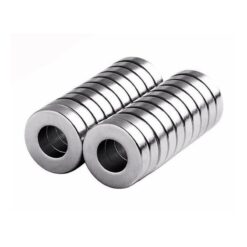
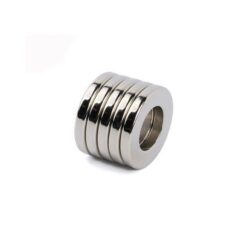
Neodymium Ring Magnets
Neodymium Ring Magnet 20 x 3 mm with 10 mm Hole (13/16 x 1/8 in), N35 Rare Earth Ring Magnet
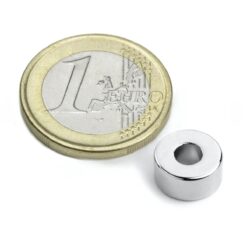
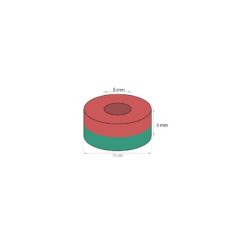
Neodymium Ring Magnets
Neodymium Ring Magnet 10 x 3 mm with 5 mm Hole (3/8 x 1/8 in), N35 Rare Earth Ring Magnet
Neodymium Ring Magnets
Neodymium Ring Magnet 25 x 10 mm with 6 mm Hole (1 x 3/8 in), N35 Rare Earth Ring Magnet
Neodymium Ring Magnets
Neodymium Ring Magnet 25 x 20 mm with 6 mm Hole (1 x 13/16 in), N35 Rare Earth Ring Magnet
Neodymium Ring Magnets
Neodymium Ring Magnet 15 x 3 mm with 5 mm Hole (9/16 x 1/8 in), N35 Rare Earth Ring Magnet
Neodymium Ring Magnets
Neodymium Ring Magnet 22 x 10 mm with 5 mm Hole (7/8 x 3/8 in), N35 Rare Earth Ring Magnet
Neodymium Ring Magnets
Neodymium Ring Magnet 18 x 10 mm with 6 mm Hole (11/16 x 3/8 in), N35 Rare Earth Ring Magnet
Reviews
There are no reviews yet.